
Most bloggers do not need a brand-new site; they need a better direction. Within the vast landscape of online publishing, it is common to hit a wall.
I have seen this happen more than once. You publish for months, learn what you enjoy, notice what readers respond to, and then realize your blog niche feels too small, too broad, or flat-out wrong. A smart blog niche pivot lets you change course without throwing away the work you have already done. A blog niche pivot can offer a powerful opportunity for growth.
The trick is knowing what to keep, what to tighten, and what to leave behind. That is where the real shift starts.
Table of Contents
Key Takeaways
- Determine Necessity: Distinguish between needing a fresh start and simply shifting focus. If your target audience overlaps with your new topic, a pivot is usually more efficient than starting a new domain.
- Audit Before Acting: Conduct a thorough content audit to categorize existing posts. Preserve high-performing, evergreen content, and retire or refine pieces that no longer align with your new direction.
- Create a Transition Roadmap: Use bridge content to connect your old and new topics, helping your existing audience follow your evolution without feeling alienated.
- Update Site Signals: Refresh your homepage, navigation, and about page to reflect your new focus, ensuring that both readers and search engines recognize your updated brand identity.
- Maintain Patience: A transition period with potential traffic dips is normal. Focus on long-term engagement and consistent publishing rather than panicking over short-term fluctuations.
Figure out whether you need a pivot or a full break
A niche pivot is a turn, not a bonfire.
If your current blog and your new idea still speak to the same target audience, you are probably looking at a pivot. For example, if your site is about beginner gardening and you want to write about backyard chickens, that can work well. The reader overlap is real, and the topics exist within a similar sub-niche. However, if your site is about skincare and you now want to cover fantasy football, that is a different story entirely.
It might be advisable to do a niche case study on your current niche and add a prompt to your LLM or GPT to explore a related sub-niche. Click here to see what a case study looks like before doing a blog niche pivot.
When I look at a possible change, I ask three plain questions:
- Would the same target audience read both topics?
- Can my old posts naturally point to the new ones?
- Does my current domain still make sense for the new direction?
If you answer yes to at least two, you likely do not need to start over.

This matters because many bloggers confuse boredom with misalignment. You are not always in the wrong blog niche. Sometimes you are in the right neighborhood, but on the wrong street. In some cases, you may find success through niche narrowing, where you refine your focus to become an authority in a more specific area of your existing subject.
A pivot also makes sense when your traffic says one thing and your content plan says another. Maybe your blog started as a general lifestyle site, but your budget meal posts keep bringing people in. That is not a problem. It is a sign of market demand. When the data shows that your readers are consistently interested in a particular topic, that is a clue you should follow.
If your readers keep voting for one topic, listen to them before you buy a new domain.
The goal is not to cling to your old idea. It is to respect the momentum you have already built while ensuring your blog niche remains relevant to your history and your future growth.
Audit the content you’ve already earned
Before you write a single post in the new direction, take stock of what your blog has already achieved.
That means reviewing your search traffic, backlinks, email signups, affiliate marketing revenue, comments, and internal link structure. Even a small site holds valuable assets. A post with only 200 monthly visits can still do heavy lifting if it earns high-quality links or drives conversions for your affiliate marketing partners.
When I perform a content audit, I sort posts into four buckets. This process helps preserve your existing Google search rankings while you transition.
Here is the simplest version:
| Post type | What to do | Why |
|---|---|---|
| Strong traffic, fits new topic | Update and keep | It is likely evergreen content that already has momentum |
| Strong traffic, weak fit | Add bridge links | It can still feed your new direction and capture search traffic |
| Low traffic, good fit | Improve and rework | Use keyword research to fix the angle or search intent |
| Low traffic, poor fit | Retire, merge, or noindex | It clutters the site and hurts your topical authority |
That one table can save you months of messy decision-making.
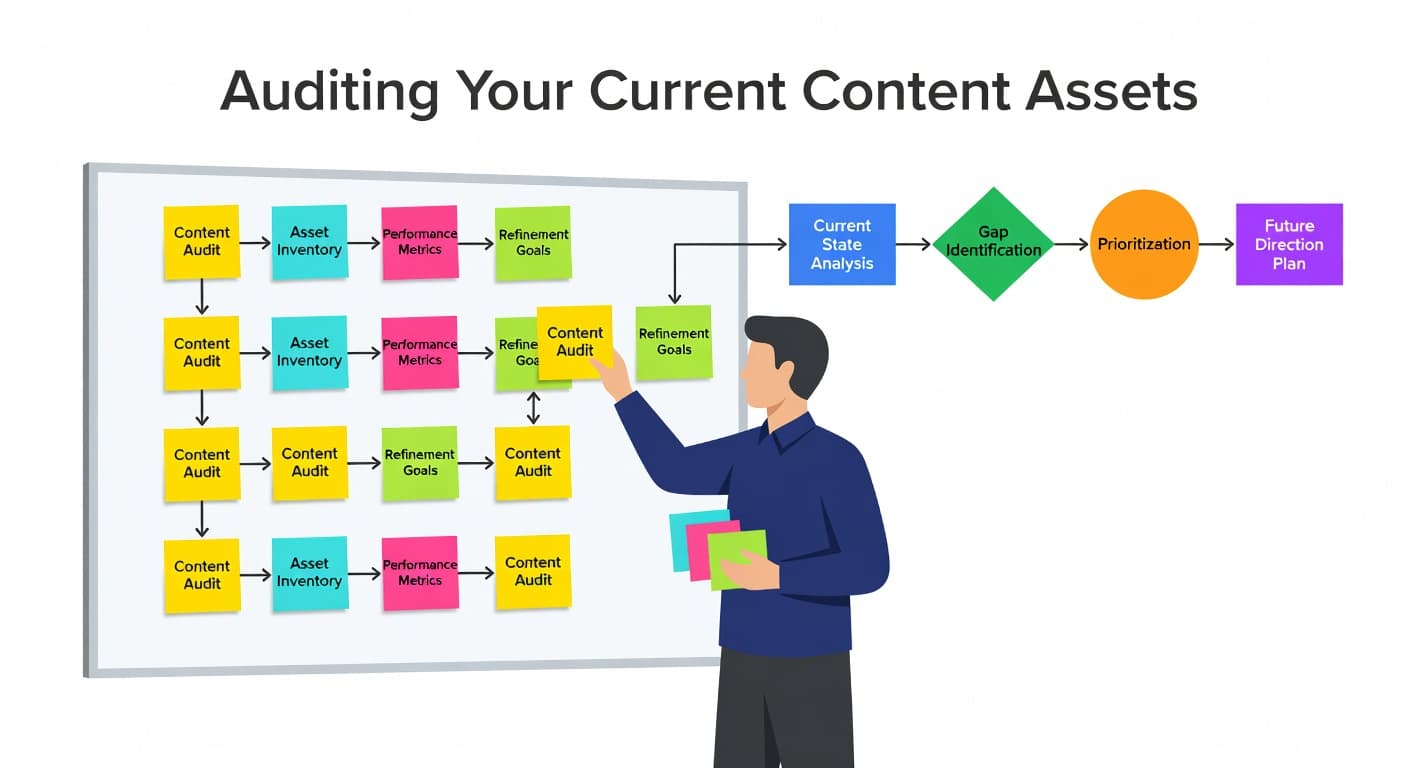
Do not delete first and think later. That is how bloggers erase useful pages they could have refreshed. Start with the posts that already have proof behind them in Google search. Ask yourself if a page can support your new focus with a new intro, better examples, or stronger internal links.
If your problem is not content quality but topic fit, objective data helps more than guesswork. That is where tools and frameworks matter. If you are trying to find the overlap between your old category and your next one, perform fresh keyword research to see where the audience intent still lines up. You can also take a look at niche research kits to better understand how to position your content.
A good audit does not only cut. It reveals the bones of your next version.
Understanding the importance of a blog niche pivot is vital for adapting to market trends. It can help you align your content with what your audience truly wants.
Build a bridge between your old audience and your new topic
This is the step many bloggers skip, and it is the primary reason readers get confused.
You cannot jump from one subject to another and expect your community to follow without context. Instead, you need to develop a transition roadmap. Think of this as laying planks across a gap to support your audience retention rather than asking readers to leap across a void.

If your blog previously focused on couponing but you now want to pivot toward simple living and low-cost home systems, your transition roadmap should guide readers through that change. Bridge posts might cover topics like spending less by meal planning, building routines that cut waste, or setting up a home that saves money long term. These topics allow your existing audience to stay with you while you begin to attract new readers. Interestingly, these same principles apply if you are managing a YouTube channel pivot, as creators often need to manage multi-platform expectations during a major shift.
I have found that the best bridge posts do one of three things: they solve a shared problem, introduce a broader theme, or explain your next direction out loud.
That last option works better than many bloggers think. A post that explains your transition and the reasoning behind it builds trust, provided the change is honest and clear. Readers rarely mind a shift in content mix. What they truly mind is confusion.
Your internal linking strategy is a crucial part of this content strategy. Older posts should begin pointing toward your newer, more aligned articles. You do not need to rewrite every old page. Often, one fresh paragraph and two smart links are enough to guide traffic toward your new focus.
A blog niche pivot works best when your old content becomes a functional runway for your new direction rather than dead weight. By balancing your content mix effectively, you ensure that your transition roadmap leads to long-term growth.
Refresh the signals readers see first
Once the content plan is in motion, update the parts of your site that speak before you do.
Start with your homepage, about page, navigation menu, category labels, and featured posts. If those pieces still describe the old version of the blog, the pivot will feel half-finished no matter how good the new articles are.
I have watched bloggers publish ten strong posts in a new niche while their homepage still promises something else. That is like repainting the living room while the front door still points guests to the garage.
Your about page matters more than most people think. It does not need a dramatic confession; it needs a clear explanation of who the blog helps now, what problems it solves, and why you are the right person to write it. Use this space to establish your brand voice and build E-E-A-T for your new topic. This demonstrates your authority to readers and search engines alike, which is essential for long-term growth.
The same goes for your email newsletter and lead magnets. If your old freebie attracts the wrong reader, it will keep filling your list with people who do not care about your new content. Better to have a smaller, sharper list of engaged subscribers than a large list with no interest.
These updates are also vital for your bottom line. When your site signals are clear, you create a stronger foundation for monetization. Whether you want to focus on affiliate marketing or the sale of your own digital products, your site needs to present a cohesive identity to convert visitors effectively.
If terms like categories, tags, redirects, and pillar pages still feel muddy, this blogging glossary can help straighten things out fast.
This part of the process is not flashy. But it tells readers, search engines, and future brand partners exactly what your site stands for today.
Give the pivot time, but watch the right signs
Many bloggers make the turn, post for three weeks, and then start to panic.
That is too soon.
Ultimately, the success of a blog niche pivot is determined by how well you connect with your audience during the transition.
A blog niche pivot often feels awkward in the middle. You might notice some follower loss or a temporary dip in search traffic. Some old readers will stop clicking, and new readers have not fully arrived yet. That does not mean the move failed. It simply means you are in a period of transition.
What should you watch to ensure your new content focus is working? I like to look at simple signals. Are the new posts getting better engagement? Are people clicking deeper into the site? Are you seeing a healthy trend in your subscriber growth? Additionally, check if your affiliate clicks are aligning better with your new direction.
You should also look at how your content performs across your different social media platforms. Are those communities engaging with your updated topics? Monitoring these metrics, along with gauging the search demand for your new niche, provides a much clearer picture of success than staring at total pageviews alone.
Reflecting on your core message is essential as you navigate this blog niche pivot.
Remember that a blog niche pivot is not just a change; it’s an evolution of your blogging identity.
Keep a steady publishing rhythm. Not frantic, just steady. A pivot needs a consistent pattern. If your site suddenly looks random, readers will not know where you are headed.
One final tip: do not drag your old niche behind you for a year out of guilt. Keep the content that still helps your current strategy, and retire what does not. That distinction matters.
The middle of a pivot can feel like driving through fog. You do not stop just because you cannot see the whole road. You slow down, keep your hands steady, and follow the lane markers you do have.
With careful planning, your blog niche pivot can evolve your content strategy into something truly special.
Frequently Asked Questions
Do I need to delete my old blog posts when pivoting?
Not necessarily. Instead of deleting them, categorize them based on their search performance and relevance to your new topic; you can often update, merge, or keep them to preserve your site’s existing authority.
In the end, your blog niche pivot should reflect both your interests and the demands of your audience.
How will a niche pivot affect my SEO rankings?
A pivot can temporarily impact rankings as Google re-evaluates your site’s topical authority. However, by using internal linking to bridge your old and new content, you can transfer existing domain authority to your new focus area.
Ultimately, a blog niche pivot should reflect your growth and what you’ve learned along the way.
A successful blog niche pivot requires not just content adjustment but also a strategic approach to audience engagement.
How long does a successful niche pivot take to show results?
Embracing a blog niche pivot can transform your blogging journey into a more fulfilling experience.
Your ability to effectively communicate the reasons for your blog niche pivot will also influence reader retention.
When considering a blog niche pivot, remember to reflect on your long-term goals and the legacy you wish to create.
Eventually, a blog niche pivot may even lead to new revenue streams you hadn’t considered before.
Moreover, a blog niche pivot can present opportunities for collaboration with other bloggers in your new area.
Bear in mind that a blog niche pivot can lead to unexpected challenges, but also great rewards.
Your blog niche pivot will require patience and persistence, but the results can be well worth the effort.
A pivot is a transition rather than an overnight switch, so expect an awkward phase of a few months. Focus on steady, consistent publishing in your new niche, and track engagement metrics rather than obsessing over daily pageview counts.
What if my new niche doesn’t overlap with my current one at all?
If your old and new topics have zero overlap in audience, you might be better off starting a new site. Maintaining a blog with two completely unrelated topics can confuse your readers and dilute your search engine topical authority.
As you embark on this blog niche pivot, remember that each step is part of a larger journey.
Final thoughts
Starting over sounds clean, but it often wastes the hardest part of blogging, which is the trust and traction you have already earned. A strategic blog niche pivot allows you to maintain your momentum while building topical authority on your niche site over time. A sharp content focus is often the fastest way to generate passive income because it aligns your expertise with the specific problems your readers want to solve. When you refine your strategy, you keep the posts that still work and create a clear path into the new topic.
If you would like feedback while you navigate this shift, theBlogMan Academy on Skool is worth having on your radar. You can join theBlogMan Academy of Content Creation to work through the transition with other creators who are building, testing, and refining their blogs in real time. This community is an excellent resource for anyone looking to optimize their monetization strategies as they grow.
A good pivot does not erase your past work. It simply gives it a better job.
This post may contain affiliate links. If you make a purchase through these links, I may earn a small commission at no extra cost to you.
Ultimately, a blog niche pivot not only revitalizes your content but also keeps your readers engaged and eager for what’s next.