
Publishing random posts without a cohesive content strategy feels productive, right up until your site starts looking like a junk drawer.
That is the problem most small site owners run into. You have good ideas, solid effort, and a niche you care about, but the content does not build on itself. It sits there, disconnected, failing to establish the topical authority needed to rank in competitive search results.
Implementing topic clusters and niche sites will guide your content strategy, ensuring that each article contributes to a greater understanding of your focus area.
Importance of Topic Clusters Niche Sites
I have seen the opposite happen as well. When you group related posts around a clear theme, the site makes more sense to readers, to Google, and to you. This is why topic clusters niche sites are essential for small site owners. By organizing your site into topic clusters niche sites, you ensure that every piece of content contributes to your overall goals. When you implement topic clusters niche sites effectively, you stop chasing individual rankings and start building a recognizable hub of information that search engines trust.
Key Takeaways
- Structure over quantity: Small niche sites build authority by organizing content into a hub-and-spoke model rather than publishing scattered, disconnected articles.
- Define a narrow pillar: Success starts with a focused pillar page that solves a specific problem, avoiding overly broad topics that make it difficult to establish expertise.
- Map by intent: Structure your supporting articles based on user search intent—such as troubleshooting, comparisons, or beginner guides—to avoid keyword cannibalization.
- Internal linking is essential: A coherent cluster requires clear, logical internal linking between the pillar page and its supporting articles to help search engines understand your site’s hierarchy.
- Maintain and grow: Treat your cluster like a garden; update existing content, prune overlapping pages, and expand into new subtopics as you gain insights from search data.
Table of Contents
Why topic clusters work better than random posting
A topic cluster uses a hub and spoke model to organize your content. You choose one core subject as your central pillar page, then build supporting articles around it that function as the spokes. One page acts as the main guide, while the other pages answer narrower questions that branch off from it.
For small niche sites, this structure matters more than most people think. You are not trying to out-publish giant sites; instead, you are trying to demonstrate deep expertise in a tight area. Using topic clusters allows you to showcase this depth without spreading your resources too thin. When you move away from treating each post like a solo act, you can start building a cohesive content strategy that improves your overall site architecture.
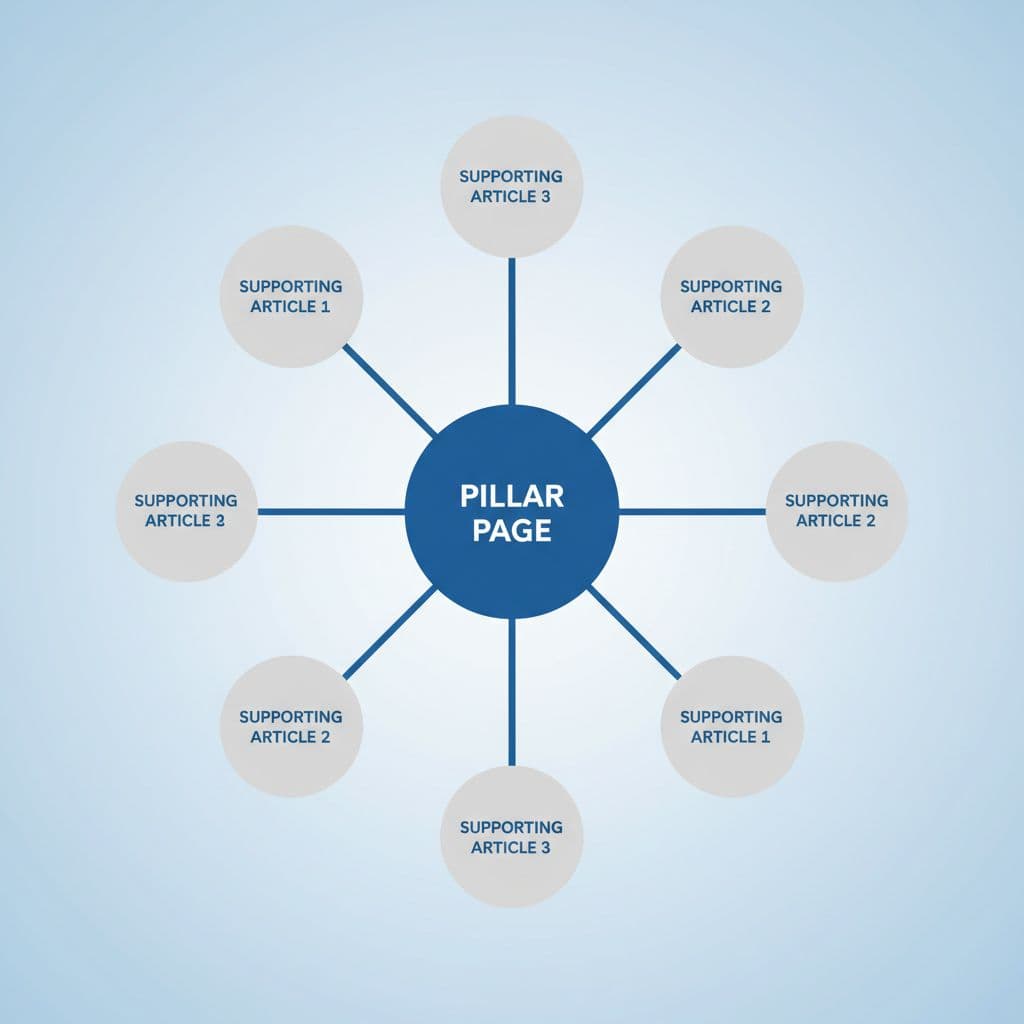
Ultimately, the objective of implementing topic clusters niche sites is to create a seamless experience that keeps users returning for more valuable content.
Think of it like opening a tiny bookstore. If every shelf has one book on a completely different subject, customers get confused. If one shelf has a strong section on a single topic, including beginner guides, troubleshooting manuals, comparison books, and advanced strategies, readers stay longer and trust the information.
Establishing topic clusters niche sites requires thoughtful planning and execution, but the results can significantly enhance your site’s visibility and credibility.
Search engines read that pattern too. A site with one article on composting, one on email marketing, and one on hiking boots fails to send a clear signal. A site with a detailed guide to balcony gardening, plus supporting posts on containers, soil, wind protection, and watering, builds immediate topical relevance. By aligning your content with how semantic search works, you help algorithms understand your site as an authority.
Ultimately, readers benefit first. They land on one post, find answers, and click into the next logical page. This improved user experience keeps visitors engaged, which eventually translates into higher organic traffic. Remember, the search benefit follows the user benefit, not the other way around. By implementing effective topic clusters, you create a clear roadmap that helps both your readers and your SEO performance.
Start with a pillar topic that is narrow enough to win
This is where most content strategies go off the rails. The pillar page is often too broad, making it impossible to establish authority quickly.
Fitness, coffee, and dog training are all examples that are far too broad. A small niche site needs a pillar page that makes one clear promise to a specific group of people. Instead of trying to own a massive topic, use keyword research to identify a narrow subject that allows you to demonstrate your E-E-A-T by solving a specific problem. Instead of “gardening,” you might build a pillar page around “balcony vegetable gardening for renters.” Instead of “coffee,” you might focus on “manual espresso at home for beginners.”
Incorporating topic clusters niche sites into your strategy allows for a more structured and integrated approach to content marketing.
A good pillar page usually passes three tests:
With careful attention to detail, you can leverage topic clusters niche sites to build a lasting online presence that resonates with your target audience.
With a strong foundation built on topic clusters niche sites, your ability to rank higher in search results will naturally improve.
- It solves a real problem people discuss in plain language.
- It has enough subtopics to support six to ten useful supporting articles.
- It fits the site you want to build six months from now, not just the post you want to publish today.
This approach not only showcases your knowledge but also builds trust with your audience, making them more likely to engage with your topic clusters’ niche sites.
That last point matters. I have made the mistake of choosing topics that looked easy to write about but had nowhere to grow. They were published, then they stalled. A strong cluster should open doors rather than back you into a corner.
One of the easiest ways to find the right topic is to work backward from audience pain points. Use keyword research to uncover what frustrates your readers, what confuses them, and which long-tail keywords they use when comparing products. By centering your content on these long-tail keywords, you create a foundation for your subtopics that directly answers user intent. This approach keeps you focused on the reader’s problem, which is the most effective way to build trust and authority in the eyes of search engines.
A small site does not need a massive, all-encompassing guide. It needs a focused pillar page that anchors a set of helpful subtopics. In fact, smaller is usually better at the start. You can always expand your subtopics later, but it is much harder to rescue a topic that was too wide from day one.
Map supporting articles by search intent, not by keyword variations
Topic clusters niche sites emphasize the need for comprehensive content, guiding users through their research journey efficiently.
Once you have chosen the pillar, the next job is building the supporting cluster content around it. This is where people often create a pile of near-duplicate articles and call it a cluster.
That is not a cluster. That is clutter, and it often leads to keyword cannibalization, where your pages end up competing against each other in the search results.
The better way is to sort your subtopics by search intent. Ask what the reader wants when they search. Are they trying to learn the basics, fix a problem, compare options, or estimate costs? By focusing on search intent, you ensure that each piece of cluster content serves a distinct purpose. For one pillar, you can usually find several clean buckets for your informational queries:
- beginner questions
- setup guides
- common mistakes
- troubleshooting
- product comparisons
- maintenance or next-step articles
Let us say your pillar is balcony vegetable gardening for renters. Good supporting subtopics might include best containers for small balconies, how to protect plants from balcony wind, easy vegetables for low-light balconies, and why tomatoes turn yellow in pots. Those are different questions with different needs. They support the same core topic without stepping on each other.
If you want a clear outside example of how pillar and cluster pages fit together, Ahrefs has a helpful topic cluster walkthrough that shows the hub-and-supporting-page model in a straightforward way.
A good cluster is not a pile of keyword variants. It is a set of connected answers for the same reader.
When I map a cluster, I usually write the pillar in the center of a page and then branch out into question types. I do not start with search volume. I start with what a person needs to know after reading the main guide because that keeps the cluster human. After establishing those needs, I check whether those questions also line up with phrases people actually search for.
If two article ideas satisfy the same intent, combine them. If one idea is too thin to stand alone, fold it into the pillar or into a broader support post. Small niche sites do not need dozens of skinny pages. They need a smaller number of high-quality pages that genuinely earn their place.
Build the internal links like a map, not a maze
By continuously enhancing your topic clusters’ niche sites, you can maintain a dynamic and attractive site that keeps users engaged.
A topic cluster only works if the pages are connected clearly. Proper internal linking is the foundation of this strategy, as it creates a clear content hierarchy that helps search engines understand the relationship between your pages.
The pillar page should link out to the supporting articles where it makes sense. Each supporting article should link back to the pillar to pass link equity, which helps your site build topical authority. Some supporting articles should also link to each other when the reader would naturally want that next step.
This sounds obvious, but you would be surprised how many niche sites forget the second half. They publish related posts, yet leave them floating around with no structure. That wastes the whole point of organized internal linking.
As you articulate your topic clusters niche sites, ensure each piece aligns with the broader goals of your content strategy.
A clean internal linking pattern usually looks like this:
- The pillar links to every supporting article that belongs in the cluster.
- Each supporting article links back to the pillar with natural anchor text.
- Related supporting posts link to one another when there is a clear reader benefit.
The key is to focus on using varied anchor text. Don’t force the exact same wording every time. If your pillar is about balcony vegetable gardening, one post might link back with “beginner balcony gardening guide,” while another might say “full guide to growing vegetables on a balcony.” Both are fine because both help the reader understand where the link goes.
You also do not need to link every page to every other page. That is where sites get messy. Link where the relationship is real. If someone is reading about choosing containers, a link to potting soil makes sense. A link to trellises might make sense, too. A link to a totally different category on your site probably does not.
This systematic approach to topic clusters niche sites can significantly improve the way users interact with your content and perceive your authority in the niche.
I also like to place these links high enough on the page that readers see them before the end. Some of the best-performing cluster links are in the opening section, where a reader realizes that the site has the next answer too.
If a post cannot naturally link back to the main guide or does not support the same reader journey, it may not belong in that cluster at all.
Publish in batches so the cluster feels real from day one
One isolated article rarely creates momentum. A small batch often does.
Incorporate feedback and insights to refine your topic clusters niche sites, ensuring they remain relevant and valuable over time.
When I am building a new cluster, I prefer to launch the pillar content and at least three supporting articles close together. That gives the site enough structure for the internal linking to matter. It also provides a better user experience by giving readers somewhere relevant to go next.
You do not need to disappear for two months and come back with fifteen posts. That is not realistic for most people. What works better is a tight first batch of evergreen content, then steady follow-up pieces.
My usual rhythm is simple. I outline the pillar content first, then draft three support posts that answer the most obvious follow-up questions. After that, I publish the main page once it has live links to those supporting pages. The cluster feels complete, even though it is still small.
Ultimately, the goal of topic clusters niche sites is to create a coherent narrative that guides users through a series of connected ideas, enhancing their overall experience.
This matters because empty promises are obvious. If your page keeps saying “I will cover that in another post” and the other post does not exist yet, the site feels unfinished.
There is also a motivation benefit here. A cluster gives you a short-term editorial target. Instead of asking, “What should I write next?” you ask, “What is the next missing page in this set?” That makes planning easier, which means you are more likely to keep publishing.
Small niche sites win by being organized earlier than their size would suggest. A batch of connected content looks bigger, stronger, and more useful than the same number of scattered posts.
Keep the cluster alive by updating, expanding, and trimming overlaps
A topic cluster is not a one-time project. It is more like a garden. You plant it, then you keep an eye on what needs pruning and what needs another row.
After your topic clusters are live, check which pages are getting impressions but not clicks. Look at which terms each page starts showing up for in Google Search Console. Sometimes you will spot a missing subtopic almost immediately.
You might notice your guide to balcony vegetables is appearing for the best herbs for windy balconies, even though you only mention herbs in passing. That is a good sign. It may deserve its own supporting post.
Strategically implementing topic clusters niche sites can lead to greater content relevance and help in capturing audience interest effectively.
As you develop topic clusters niche sites, consider the long-term potential of nurturing your audience’s interests and fostering loyalty.
The other common issue is overlap. Two articles start competing with each other because the angle was not separated well enough. When that happens, merge them or rewrite one with a sharper purpose. Small sites cannot afford a bunch of muddy pages, as you need to preserve your crawl budget so search engines can navigate your site structure more efficiently.
If you like learning visually, this topic cluster strategy video is a handy companion while you are reviewing your own setup and spotting gaps.
This is also the stage where patience matters. A cluster often strengthens gradually as the pages age, pick up impressions, and gain authoritative backlinks. Do not panic if a new cluster does not immediately improve your SERP rankings. Instead, look for progress in signs of coverage. Are more pages being indexed? Are more related queries showing up? Are readers clicking between articles?
Those are healthy signals. They tell you the structure is working to improve your site authority. Over time, consistent maintenance will lead to better SERP rankings as the site learns exactly what its audience wants next. The best clusters on small sites rarely stay frozen; they get updated, tightened, and expanded to remain relevant.
Integrating topic clusters niche sites into your strategy is essential for building a robust online presence that resonates with both users and search engines.
A simple topic cluster example for a tiny niche site
Let’s make this less abstract. By using topic clusters to organize your content, you provide a clear structure for search engines to follow.
Say you are building a small site for apartment renters who want to grow food on a balcony. Choosing a narrow focus allows you to build a pillar page that serves as the foundation for your site. Here is how a first-pass cluster could look, designed to drive consistent organic traffic:
| Page type | Topic | Why it belongs |
|---|---|---|
| Pillar page | Balcony vegetable gardening for renters | Main guide that frames the whole topic |
| Supporting post | Best containers for balcony gardens | Subtopic: Common setup question |
| Supporting post | Easy vegetables for windy balconies | Subtopic: Problem-based beginner post |
| Supporting post | Best soil mix for container vegetables | Subtopic: Core how-to article |
| Supporting post | How often to water balcony plants | Subtopic: Maintenance question |
| Supporting post | Why tomato leaves turn yellow in pots | Subtopic: Troubleshooting article |
| Supporting post | Best trellises for small rental balconies | Subtopic: Product-led supporting content |
This structure works because every article moves the reader toward a specific goal. By aligning these subtopics with the primary pillar page, you create a cohesive user experience that effectively captures organic traffic.
Consider how implementing topic clusters niche sites can lead to a more structured approach that resonates with your audience, allowing for more in-depth exploration of themes.
You can also layer in monetization without turning the site into a wall of reviews. The trellis post, container post, and guides for tools can include product recommendations. Because you have mapped your content to match the search intent of your audience, the rest of the cluster builds the trust and authority needed to convert readers into buyers.
This is where small niche sites can punch above their weight. You do not need to be the biggest gardening site on the internet. You simply need to be the most useful resource for one specific type of gardener.
When building your topic clusters niche sites, ensure you focus on relevant subtopics that guide users through their journey, making the content more engaging and valuable.
Utilizing topic clusters niche sites can streamline your content creation process, allowing you to plan strategically and improve your site’s outreach effectively.
If that first cluster starts gaining traction, your next set of articles might branch into herbs, pest control for balcony plants, or seasonal planning for small space gardens. The site grows outward in a logical way.
That is the real payoff. A cluster does not only help one set of posts rank better; it gives your site a sane way to expand without losing its identity.
As your clusters evolve, remember that topic clusters niche sites should continuously adapt to meet the changing needs of your audience and the digital landscape.
Frequently Asked Questions
By focusing on topic clusters niche sites, you not only enhance user experience but also position your site as a leading authority in your niche.
Crafting topic clusters niche sites ensures your site not only meets the needs of users but also adapts to changing search engine algorithms effectively.
By leveraging topic clusters niche sites, you can create a content ecosystem that supports each other, enriching user experience and enhancing SEO effectiveness.
Can I have multiple topic clusters on one site?
Ultimately, successful topic clusters niche sites require a balance between depth and breadth of content to meet user needs efficiently.
Yes, you can and should eventually have multiple clusters as your site grows. The key is to ensure each cluster remains distinct so you don’t confuse your readers or create unnecessary overlap between your main hub pages.
How many supporting posts do I need for a single cluster?
There is no fixed number, but a great starting point is between six and ten supporting articles. This is enough to provide depth and demonstrate topical authority without overwhelming your content production capacity.
What should I do if two of my articles cover the same topic?
If you find your pages competing for the same keywords, you should either merge them into one comprehensive piece or rewrite them to target distinctly different search intents. Keeping your content unique and purposeful is essential for maintaining strong site architecture.
Does internal linking within a cluster really improve rankings?
Yes, strategic internal linking passes link equity throughout your cluster and helps search engines understand the relationship between your pages. It also improves user experience by guiding readers to the next logical step in their research, which increases engagement.
Remember, building topic clusters niche sites is a journey that requires ongoing commitment and adaptation to achieve lasting results.
Final thoughts
The integration of topic clusters niche sites into your strategy is not just beneficial for SEO but also enriches your content delivery to users.
A small niche site does not need more random content. It needs connected content. By focusing on topic clusters rather than scattered posts, you can build the topical authority needed to rank in competitive spaces. One strong pillar page, a handful of smart supporting posts, and a deliberate internal linking strategy will usually beat a messy archive every time.
When your site architecture is clearly connected, users spend more time navigating your related resources, which naturally increases your dwell time and signals quality to search engines.
Start smaller than feels comfortable. That is the part most people skip, and it is usually the part that makes the whole system work. If you want a place to map out your first cluster and get feedback, check out theBlogMan Academy on Skool through theBlogMan Academy of Content Creation. It is a free-to-join community for creators like you, and it is a good place to turn a loose idea into a content plan you can publish.
With clear topic clusters niche sites, you create an organized space that helps search engines recognize your expertise in specific areas, driving more organic traffic to your pages.
This post may contain affiliate links. If you make a purchase through these links, I may earn a small commission at no extra cost to you.